

The green transition takes its next step: The Nordics’ most powerful co-located battery facility inaugurated in Vandel near Vejle, Denmark
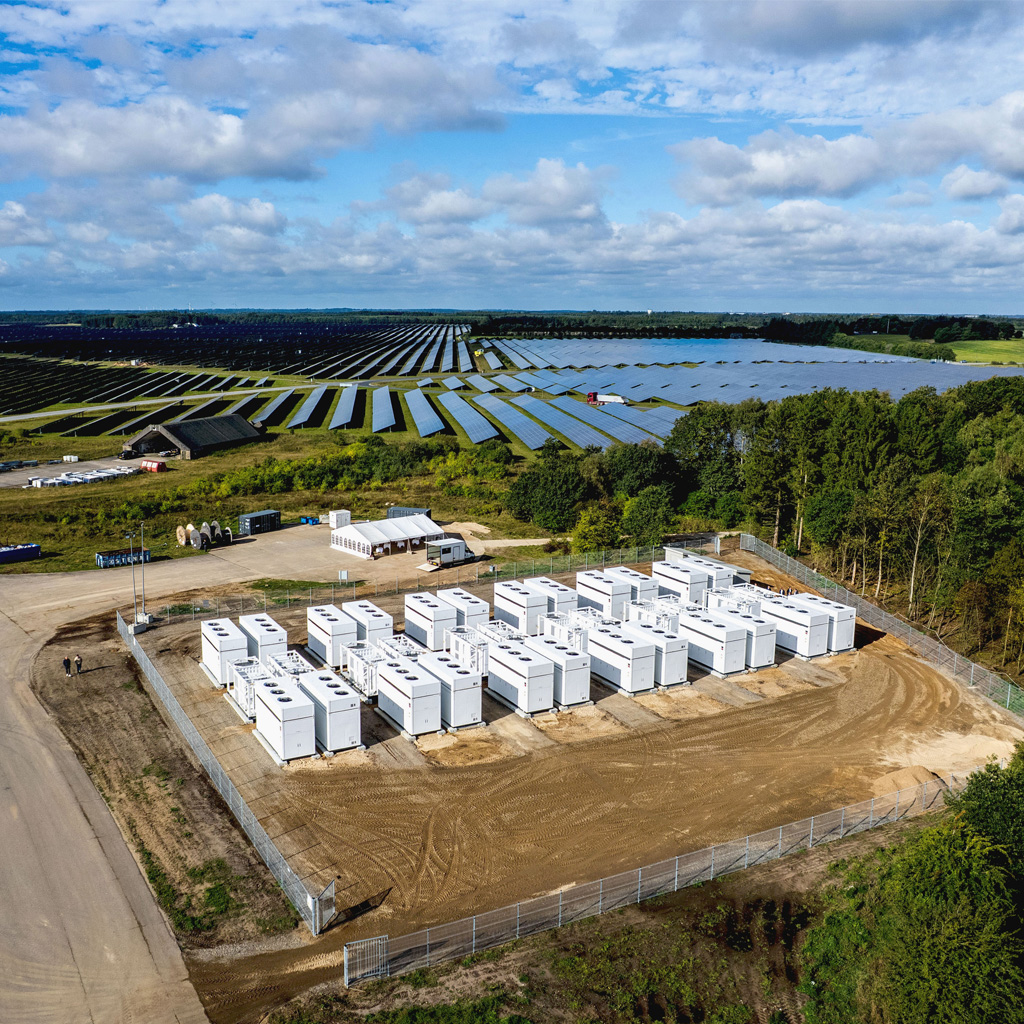
Last Friday Infranode opened a new 60 MW battery energy storage system (BESS) at the Vandel III solar park in Vejle Municipality. The battery soaks up solar power when there is a surplus and feeds it back into the grid when demand picks up. The facility, the most powerful co-located battery in the Nordics, is now up and running. ”Co-located” simply means it sits right next to the solar park and shares its grid connection, so the power is stored at the point where it is produced.
Denmark has spent years rolling out solar and wind at pace. The task now is to make that green power available around the clock, not only when the sun is up and the wind is blowing. Minister for Climate, Energy and Utilities Samira Nawa cut the ribbon at a well-attended opening event in Vandel.
“This is the answer to one of our biggest challenges: what do we do when the sun isn’t shining and the wind isn’t blowing,” said Minister for Climate, Energy and Utilities Samira Nawa.
From solar park to flexible energy hub
Vandel III, one of the Nordics’ largest subsidy-free solar parks, has – like other solar parks – had to throttle back production during periods of very low or negative power prices. The new battery lets that power flow to the grid when demand is high instead, cutting the need for fossil backup.
“For years, the debate was about how to produce enough renewable energy. That debate has largely given way to a new one: how to use that energy wisely. On sunny days, we often produce more electricity than the system can absorb: a sign the transition is working. But large volumes of green power call for greater flexibility, and that is exactly what the new battery gives us,” said Silas Harbo, Partner and Country Manager for Denmark at Infranode.
Silas Harbo sees the battery as a natural next step in the green transition:
“Electricity demand will rise sharply in the coming years, and more of that electricity will come from solar and wind. Batteries don’t replace solar panels, wind turbines or the grid, they make them work better together,” said Silas Harbo, adding: “That is why this is such a decisive step in the green transition.”
The Minister agreed: “That is exactly what makes this so interesting. The new battery lets us store power from the solar panels and use it when the sun isn’t shining. That cuts our need to import energy and makes Denmark both greener and more self-sufficient.”
She continued: “Next time I’m asked what to do when the sun isn’t shining, I can now answer: go to Vandel.”
Facts about the battery facility at Vandel III
- 60 MW / 120 MWh across six units of 10 MW each, with the option to expand to 240 MWh
- The Nordics’ most powerful BESS, connected to the Vandel III solar park (162 MWp) in Erhvervspark Vandel and using the park’s existing grid connection
- ”Most powerful” refers to output: at 60 MW, the battery can push more electricity to the grid at any one moment than any other co-located battery in the Nordics. It holds 120 MWh and can run at full power for two hours. That output is what sets it apart — it can quickly soak up surplus solar power and release it exactly when the grid needs it.
- Owned by Infranode and Bregentved Gods, which also operates the solar park via Unity Power
- Investment decision taken in January 2026, inaugurated on 25 September 2026
